Electrical R&D · Battery systems · BESS

From battery physics to grid confidence.

The useful question is not just what a model shows. It is what assumptions, checks and evidence stand behind it.

Mohammad Rezwan KhanPhD in Energy Technology · Aalborg University

01Physical assumptionsBattery & thermal models
02Explicit constraintsConversion & continuity
03Traceable evidenceSources & limitations
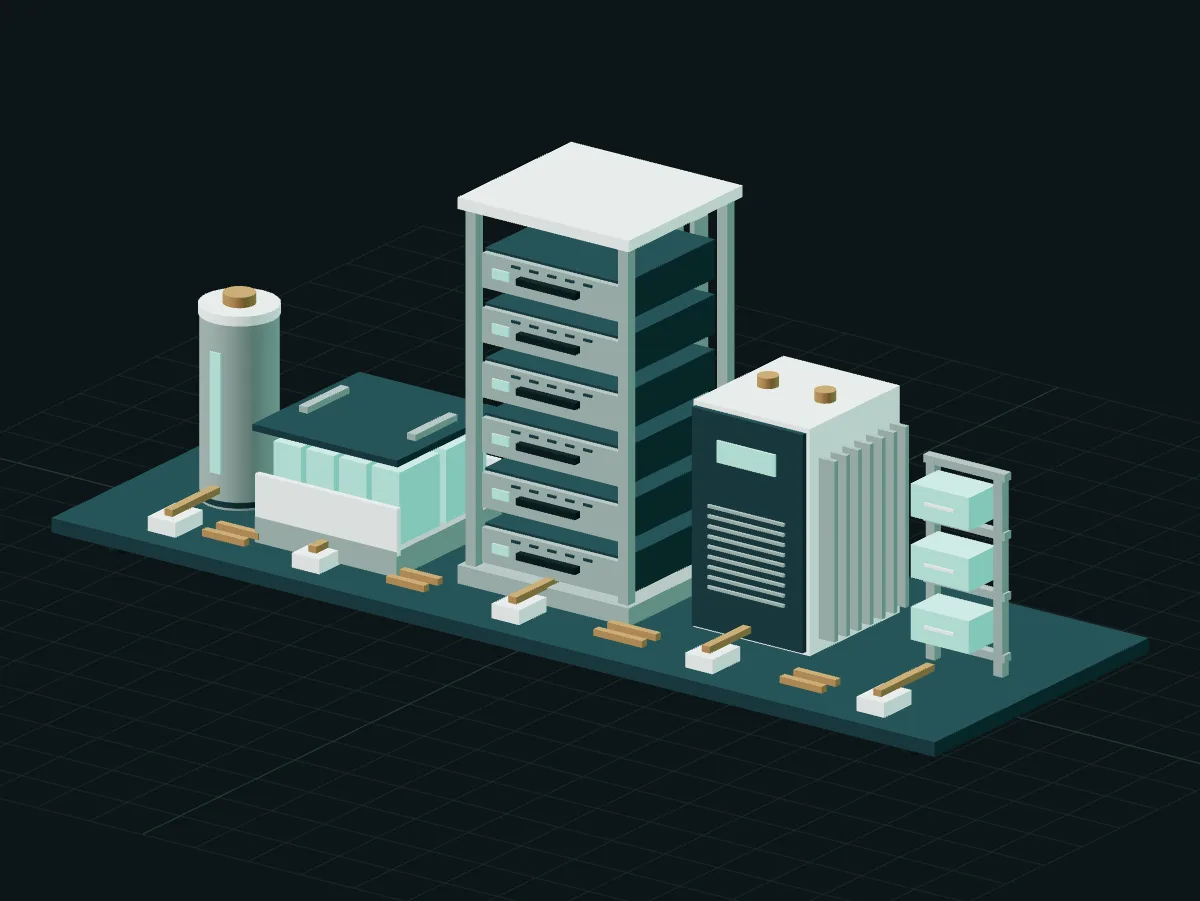
FIG. 01 / CELL → SYSTEM → GRIDCONCEPTUAL ASSEMBLY
Conceptual cell-to-grid assembly: a cell, module, battery rack, power converter and electrical load linked by copper conductors.Conceptual geometry · not to scale
CellModuleRackConverterGrid / load
Explore the diagram, or choose Inspect in 3D for an interactive view.

ENERGY LEARNING WORKSPACE

Read the model. Challenge the result.

Self-paced lessons from battery dynamics to grid decisions. Work through a source-linked task, explain its limits, then check your understanding.

0 / 8 checkpointsStored on this browser onlyContinue learning
Battery & thermalAssumptions, dynamics and uncertainty
Assurance & continuityEvidence gates and finite reserve
Dispatch & marketsOperating limits and information timing
8 lessons shown
Battery & thermalCheckpoint open

Battery dynamics: assumptions before outputs

Connect an equivalent-circuit response to its inputs, units and checks.

MATLAB Simulink Energy Lab · Source c13aec2

Explore lesson & checkpoint

Learning task

Open the source README and find the first battery pulse example. Identify the input current, initial state and the check command before running it locally.

Model boundary

Synthetic or illustrative benchmarks unless a source explicitly says otherwise. Not physical-cell, hardware, certification or grid-code validation.

What does a passing synthetic regression check establish?

Review checkpoint answer

Checkpoint answer: The documented numerical behavior is reproduced. A regression check establishes expected behavior under its stated inputs, not hardware qualification.

Battery & thermalCheckpoint open

Capacity fade: keep the holdout separate

Distinguish fitting, chronological evaluation and supported end-of-life projections.

Battery Cycle-Life Analyzer · Source 8d23047

Explore lesson & checkpoint

Learning task

Find the synthetic CSV workflow and chronological holdout description. Note which observations select the model and when a full-data refit occurs.

Model boundary

Empirical curve fits, not electrochemical or safety models. Bundled LFP/NMC data are synthetic; an EOL outside the supported window remains unavailable.

Should an end-of-life beyond the supported window be reported as a measured lifetime?

Review checkpoint answer

Checkpoint answer: No, the projection must remain bounded or unavailable. Smooth fits are not measured lifetime evidence. The source keeps unsupported projections unavailable.

Assurance & continuityCheckpoint open

BESS readiness: follow the evidence gate

Trace a requirement through evidence ownership, review and acceptance status.

BESS QA/QC Toolkit · Source 2ed8d9d

Explore lesson & checkpoint

Learning task

Read the fictional lifecycle example. Find a FAT or SAT record and identify its evidence, owner and applicable readiness policy.

Model boundary

Does not replace the governing contract, applicable standards, authority requirements, manufacturer instructions or a competent engineer’s acceptance decision.

Can a passing fictional audit replace project acceptance?

Review checkpoint answer

Checkpoint answer: No, project requirements and competent review still govern. Template checks do not replace contracts, applicable standards or an engineer's acceptance decision.

Assurance & continuityCheckpoint open

Continuity: power is not stored energy

Explain finite reserve and the difference between power and energy in an outage.

Datacenter Twin Lab · Source 2529864

Explore lesson & checkpoint

Learning task

Predict the effect of doubling constant load in the Atlas ride-through calculator, then compare the result. Inspect the source simulator's stated losses and boundary.

Model boundary

Deterministic synthetic aggregate-load model. No facility calibration, AC transients, protection coordination, cooling, reliability probabilities or physical controls.

With fixed reserve and efficiency, doubling constant load makes duration…

Review checkpoint answer

Checkpoint answer: Half as long. Duration is available energy times fixed efficiencies divided by constant power; this arithmetic does not model a facility.

Dispatch & marketsCheckpoint open

Grid services: a request meets constraints

Separate requested active/reactive power from feasible capability.

Smart Grid Storage Playbook · Source 928ceec

Explore lesson & checkpoint

Learning task

Find the capability-allocation reference. List the power, energy and state-of-charge constraints before changing a service request.

Model boundary

Educational reference, not a grid-code compliance determination, protection-setting approval, plant-controller specification or battery-warranty assessment.

Is a requested grid service automatically deliverable?

Review checkpoint answer

Checkpoint answer: No, operating and energy constraints must be checked. Capability and operating limits bound delivery. An educational reference is not grid-code approval.

Dispatch & marketsCheckpoint open

Arbitrage: separate forecast from hindsight

Identify what information is available when a dispatch decision is made.

VoltRL · Source ad5a7e5

Explore lesson & checkpoint

Learning task

Compare the source's synthetic sequential-price and historical day-ahead protocols. Find the forecast-timing and result provenance checks.

Model boundary

Not a live bidding system or revenue forecast. Price-taking assumptions omit bid curves, fees, imbalance settlement, market impact and plant-level certification.

Why separate information protocols when comparing policies?

Review checkpoint answer

Checkpoint answer: To prevent an unfair hindsight advantage. Protocol separation controls information leakage. Backtests do not guarantee future market performance.

Dispatch & marketsCheckpoint open

Hybrid energy: follow the dispatch order

Separate battery output from stored-energy change in a synthetic hybrid-energy screen.

HelioForge Energy Lab · Source 5f408d4

Explore lesson & checkpoint

Learning task

Open the methodology and browser preview. Trace the renewable, battery, grid and generator dispatch order. Identify where efficiency changes the battery energy balance.

Model boundary

Synthetic hourly screen, not optimization, power flow, dynamic stability or field validation. Terminal state of charge is unconstrained. The standalone preview does not run new Python calculations.

What kind of calculation does the hybrid dispatch method provide?

Review checkpoint answer

Checkpoint answer: A synthetic hourly screen with fixed dispatch order. The model is a synthetic hourly AC-equivalent screen, not optimization, power flow or a dispatch instruction.

Dispatch & marketsCheckpoint open

Wind offers: scenarios before decisions

Connect a hypothetical wind offer to its scenario distribution and settlement assumptions.

ZephyrTrade · Source ebcd8f6

Explore lesson & checkpoint

Learning task

Open the browser lab and published engine checks. Identify the production scenarios, price inputs and information available before an offer is selected.

Model boundary

Research preview with synthetic examples and documented historical-data exclusions. No live provider, trade execution, investment advice or market-performance validation.

Does the synthetic offer calculation execute a market trade?

Review checkpoint answer

Checkpoint answer: No, it explores hypothetical offers without trading. Synthetic scenarios and backtests are not live prices, order execution or validated future revenue.
Reading checkpoints are not qualifications or engineering acceptance. Repository evidence is linked, not independently rerun here. Curriculum reviewed 2026-09-30; source snapshots remain commit-pinned.

Clear learning progress?

This removes your completed checkpoints from this browser.

01 / ENERGY EVIDENCE ATLAS

Follow the system. Find the evidence.

A technical reading path, with an optional visual tour. Every chapter keeps the source and its limitations together.

A reading map, not a plant model

One assembly. Several engineering questions.

Follow the energy path from cell behavior to the electrical load. Each chapter leads to a different repository, its method, its published checks and its limits.

Read
Choose a chapter or switch to Evidence mode for every source record in one continuous reading path.
Inspect
The numbered controls reframe a conceptual assembly. Geometry and materials explain function; they do not represent selected equipment.
Reproduce
Open the pinned source before running an upstream example. Documentation review is not a rerun of the scientific test suite.
Boundary
No live telemetry, manufacturer design, certified twin, measured validation or construction-ready specification is implied.
Active reference

Start with the physical assumptions.

Reduced-order battery, thermal, state-estimation and converter models with runnable checks and stated boundaries.

Explore MATLAB Simulink Energy Lab

Source snapshot · 2026-09-16
Pinned source c13aec2 ↗Published checks ↗

Question
How do battery, converter and BESS-control models behave under explicit checks?
Method
Equivalent circuits, electro-thermal models, extended Kalman filters and reduced-order converter/control references.
Checks
The pinned README documents deterministic no-plot checks and links a historical MATLAB validation record. Those upstream suites were not rerun for this showcase.
Boundary
Synthetic or illustrative benchmarks unless a source explicitly says otherwise. Not physical-cell, hardware, certification or grid-code validation.
Next action
Run the first battery pulse check; inspect the inputs before changing a parameter.
Research package

Keep uncertainty in the picture.

Chronological holdout, empirical model comparison, bounded EOL/RUL and residual-bootstrap diagnostics.

Explore Battery Cycle-Life Analyzer

Source snapshot · 2026-09-16
Pinned source 8d23047 ↗Published checks ↗

Question
How can capacity-fade models be selected and end-of-life projections bounded transparently?
Method
Linear, power-law and logarithmic curve fits selected using the latest held-out observations before a full-data refit.
Checks
The pinned source provides tests and a reproducible synthetic CSV workflow. An opt-in Oxford measured-current example has separate data licensing and stated approximation limits.
Boundary
Empirical curve fits, not electrochemical or safety models. Bundled LFP/NMC data are synthetic; an EOL outside the supported window remains unavailable.
Next action
Run the supplied CSV example, inspect the holdout score and distinguish bounded projections from measured lifetime.
Draft toolkit

Make readiness an evidence question.

Lifecycle templates and executable readiness audits for reviewable BESS delivery evidence.

Explore BESS QA/QC Toolkit

Source snapshot · 2026-09-16
Pinned source 2ed8d9d ↗Published checks ↗

Question
What evidence is needed from supplier review through commissioning and handover?
Method
Structured evidence registers, status policies, deadline checks and traceability audits across FAT, SAT, commissioning and handover.
Checks
The source documents template validation and executable audit checks against reference records. Passing fictional examples are not real-project acceptance evidence.
Boundary
Does not replace the governing contract, applicable standards, authority requirements, manufacturer instructions or a competent engineer’s acceptance decision.
Next action
Read the fictional lifecycle example, then adapt the readiness policy to the actual project.
Living handbook

A request is not always deliverable power.

Explainable grid-support references with explicit power, energy and operating limits.

Explore Smart Grid Storage Playbook

Source snapshot · 2026-09-16
Pinned source 928ceec ↗Published checks ↗

Question
How do grid-service requests meet power, energy, state-of-charge, frequency and voltage constraints?
Method
Active/reactive capability allocation, Volt-VAR, frequency-watt, ramp and multi-interval energy references.
Checks
The source documents dependency-free reference commands, unit tests and model-specific assumptions. These upstream checks were not rerun here.
Boundary
Educational reference, not a grid-code compliance determination, protection-setting approval, plant-controller specification or battery-warranty assessment.
Next action
Run a capability-allocation reference and inspect the model assumptions before using project data.
Research alpha

What happens when the supply disappears?

A local-first teaching simulator for electrical continuity, finite reserves and exact energy accounting.

Explore Datacenter Twin Lab

Source snapshot · 2026-09-16
Pinned source f6ac45e ↗Published checks ↗

Question
How do utility outages, generator failures and finite battery reserves affect power continuity?
Method
Deterministic synthetic utility, generator, battery and distribution-path scenarios; local browser arithmetic with an optional Python cross-check.
Checks
The source documents energy-accounting checks, deterministic scenarios and browser/native comparisons. Independent external technical review has not yet been obtained.
Boundary
No facility calibration, AC transients, protection coordination, cooling, workload-throughput prediction, reliability probabilities, certified uptime or physical controls.
Next action
Open the source-linked browser demo and inspect the AI-cluster generator-failure scenario.
Complete system

02 / THREE STARTING POINTS

From a question to something inspectable.

Runnable models, a browser teaching lab and structured assurance evidence. Start with the question closest to your work.

03 / BROWSER LAB GATEWAY

Power is a rate. Reserve is finite.

A synthetic 50 MW load and a 5 MWh battery make the distinction tangible. With the source fixture’s discharge and distribution efficiencies, the reserve supports the IT boundary for 307.8 seconds.

t = E × ηdischarge × ηdistribution / P

This local example varies only stored energy and constant load. It is not the upstream simulator, an equipment-sizing tool or a prediction of site behavior.

Open Datacenter Twin Lab

Demo URL is published by the source repository. Its live operation was not independently exercised in this build environment.

Pinned equations, units and fixture assumptions f6ac45e ↗

Synthetic arithmetic demonstration

Battery ride-through

Fixed efficiencies: 0.90 discharge × 0.95 distribution.

307.8 s

For an outage starting at 300 s, depletion is at 607.8 s elapsed.

Assumptions and model boundary

Energy is the available stored reserve at the outage boundary. Load and efficiencies are constant. Both distribution paths are assumed available and the supplied demand is within the original fixture’s power limits. Arbitrary inputs are arithmetic exploration, not a recheck of those limits.

No pre-outage charging, changing state of charge, generator pickup, switching transients, thermal behavior, aging, reliability probabilities or real-site calibration are simulated here. No physical controls or telemetry exist.

04 / PROJECT FINDER

Choose the problem, not just the repository.

Search locally by engineering question, method, evidence or repository. No account, API calls or AI chatbot.

6 projectsPinned source records · 2026-09-16

MATLAB Simulink Energy Lab ↗

Reduced-order battery, thermal, state-estimation and converter models with runnable checks and stated boundaries.

batterythermalSOCMATLAB

Datacenter Twin Lab ↗

A local-first teaching simulator for electrical continuity, finite reserves and exact energy accounting.

datacentercontinuityPythonbattery

BESS QA/QC Toolkit ↗

Lifecycle templates and executable readiness audits for reviewable BESS delivery evidence.

BESSQA/QCFATSAT

Battery Cycle-Life Analyzer ↗

Chronological holdout, empirical model comparison, bounded EOL/RUL and residual-bootstrap diagnostics.

batterydegradationcycle lifePython

VoltRL ↗

Synthetic sequential-price and historical day-ahead protocols with commit-bound result bundles.

arbitragedispatchPythonMDP

05 / RESEARCH → CODE

Keep the scientific record in view.

A DOI identifies the research. The linked implementation exposes related assumptions and checks—not an unsupported claim of exact replication.

Browse the publication record ↗

06 / OPEN COLLABORATION

Better questions. Stronger evidence.

Interested in battery models, measured validation datasets, BESS acceptance evidence or reproducible energy research? Start with a focused question and a source that others can inspect.